Buying · 6 min read
The Korean sunscreen in US stores is not the one everyone loves
Beauty of Joseon, Round Lab and Skin1004 all sell a different formula in the United States, with the filters the FDA allowed in 1999. Why it happened, how to tell the two apart on the box, and where the real one still ships from.
By the Dew Select editors · Updated September 17, 2026



Two products, one name
In Korea, Beauty of Joseon Relief Sun: Rice + Probiotics is SPF 50+ PA++++ and gets there with four current-generation filters: Uvinul A Plus, Uvinul T 150, Tinosorb M and Iscotrizinol. The sunscreen the brand sells in the United States, Day Dew Sunscreen, is SPF 50 "broad spectrum" with avobenzone 3%, homosalate 7%, octisalate 5% and octocrylene 5%. Same brand, same pastel tube on the shelf at Sephora and Kohl's, and not one shared UV filter.
That is not a Beauty of Joseon quirk. Round Lab retired its Birch Juice Moisturizing UVLock SPF 50+ PA++++ from the US in November 2024 and replaced it with an SPF 45 broad-spectrum version. Beauty of Joseon pulled four sunscreens from its US site in February 2025 and launched two US-only formulas. Skin1004 removed every sunscreen from its US site in March 2025, saying that shipping "unapproved OTC drugs" to America was "risky in the long term".
Why: sunscreen is a drug in America
The FDA regulates sunscreen as an over-the-counter drug, not a cosmetic. Only filters on its approved list may be used, and that list did not change between 1999 and June 2026. Korea, Japan and the EU treat sunscreen as a cosmetic and approved a generation of filters in the 2000s (Uvinul A Plus, Tinosorb S and M, Uvinul T 150, Mexoryl) that are more photostable, cover more UVA, and feel like nothing on the skin. A Korean sunscreen sold in Korea can use them; a Korean sunscreen sold in a US store cannot.
For years the brands shipped the Korean formula to American customers anyway and the FDA looked the other way. As the brands opened US warehouses, Amazon storefronts and, in Olive Young's case, physical stores, the risk stopped being theoretical, so each of them made a compliant version for the US channel and kept the original for everyone else.
In June 2026 the FDA approved bemotrizinol (Tinosorb S), the first new filter in 27 years, effective August 9, 2026. It is real progress, and the first US sunscreens using it are not expected before late 2026 or 2027. Until then, every sunscreen on a US shelf is built from the old list.
The Olive Young US moment
Olive Young opened its first US store in California in May 2026 and, in late May, moved American customers off its Global site onto a US online mall. The US mall lists 1,424 skincare products against 4,078 on the Global site, and the popular Korean sunscreens are simply not on it: Olive Young said products sold in the US "comply with FDA and other local regulations, so some products may differ in ingredients or formula". American customers who had bought the Korean formula from Olive Young Global for years noticed within days.
How to tell which one you are holding
- PA++++ on the front. The PA scale is a Korean and Japanese UVA rating. US labels do not carry it; they say "broad spectrum". A Korean brand's sunscreen with no PA rating is the US version.
- SPF 50+ versus SPF 50 or SPF 45. The plus sign is the Korean and Japanese cap. A round US number is usually the reformulation.
- A "Drug Facts" panel. US sunscreens must carry one, with "Active ingredients" listed by percentage. Korean packaging lists ingredients as one cosmetic INCI list and prints the filters inside it.
- The filter names. Avobenzone, homosalate, octisalate, octocrylene, zinc oxide and titanium dioxide are the US toolkit. Diethylamino hydroxybenzoyl hexyl benzoate (Uvinul A Plus), ethylhexyl triazone (Uvinul T 150), methylene bis-benzotriazolyl tetramethylbutylphenol (Tinosorb M), bis-ethylhexyloxyphenol methoxyphenyl triazine (Tinosorb S) and diethylhexyl butamido triazone (Iscotrizinol) mean the Korean formula.
- A different product name. Relief Sun became Day Dew; Birch Juice UVLock became a Birch Juice SPF 45. If the name on the US box is not the name everyone on TikTok says, it is a different product.
Where the Korean formula still ships from
Stores that ship from Korea or Hong Kong sell the Korean formula, because they sell what is on Korean shelves: YesStyle, Stylevana, Jolse, StyleKorean and Olive Young Global. Amazon is a mix of official US-version listings and third-party sellers importing the Korean one, so read the listing. Olive Young US, Sephora, Ulta and Soko Glam carry the US versions.
On Dew Select, sunscreen pages list only the stores that ship the Korean formula, plus Amazon marked "check the version", and the lowest-price badge is never given to a store selling the US version. Every sunscreen in our catalog is the one sold in Korea, with its PA rating shown.
 KR
Relief Sun: Rice + Probiotics SPF50+ PA++++
 KR
Hyalu-Cica Water-Fit Sun Serum SPF50+
 KR
Birch Juice Moisturizing Sunscreen SPF50+
 KR
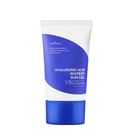
Hyaluronic Acid Watery Sun Gel SPF50+
KRAiry Sunstick Smoothing Bar
 JP
UV Aqua Rich Watery Essence SPF50+
Is the US version bad?
No. Avobenzone with octocrylene is a workable UVA filter and SPF 50 is SPF 50. The differences are the ones people import for: the Korean filters are more photostable, so protection holds for longer in sun; they cover long UVA more completely, which is the aging and pigmentation band; and they are used at lower percentages, which is why the texture is a serum and not a lotion. If you are choosing between the US version and no sunscreen, wear the US version. If you are choosing between the two, the Korean one is why you heard of the brand.
Sources: Korea JoongAng Daily (April 10, 2025 and June 10, 2026), The Korea Times (February 28, 2026), BASF and FDA on bemotrizinol (June and August 2026), Beauty of Joseon and Round Lab product pages.